
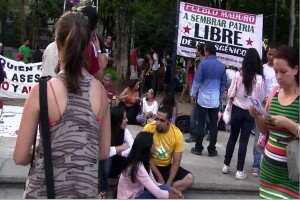
 Venezuela moves toward the final drafting and approval of a Seed Law that guarantees security and agroecological sovereignty against the threat of transgenic productions, as official sources said.
The Venezuelan State recognizes the importance of this route to preserve biological diversity and food sovereignty, as the transgenic seed market (biotechnologically modified) is under the monopoly of a few known transnationals like Monsanto.
The new legislation would protect especially the small and medium producers, encourages the use of seeds safe for the environment and human health, and the creation of institutions to deal with this issue.
The bill, including last year’s in the parliamentary agenda which should enter next month in discussion generally provides the foundation of a National Seed Institute, to audit and certify, autonomously, agricultural production in the country.
The legislator said that legal provisions are needed against GM seeds and technological packages that are used in this type of agriculture.
In the coming months the project will be discussed at the social movements, farmers and even other producers supporting GMOs.
Professor Olga Domenech, coordinator of the National Training Program in Agroecology of the Bolivarian University said that the use of GM not only harms the environment in general, but specifically contaminate local crop varieties and human.
Also interviewed by the State television, the specialist, who assists in the formulation of the aforementioned law-reported that they currently are in Venezuela professionals to agro ecological transition.
The law should include the vision of a farmer who is tied to the land, the producer facing mainly to the market and also the consumer, Domenech established.
Have been recently conducted global protests against Monsanto, the world’s largest transnational, producer of chemicals and genetically modified seeds.
One of the most controversial of Monsanto, is glyphosate, known commercially as Roundup, which according to European scientists is not biodegradable and poisons the soil.
Some activists expressed concern by stating that want to cheat the country with a Seed Law, which in Article 1, instead of saying that protects the seed as cultural and natural heritage of Venezuelans, says it is a law encourage the production of seeds by researchers and that favors the rights of the “breeders” who are those who privatize seeds.
Gustavo Carrasquel | ANCA24
 La Tortuga Foundation asks the National Executive be incorporated into the Technical Committee that oversees tourism development plans of La Tortuga island.
Once again public, arbitrary policies without consensus, disrespect the work of scientists and conservationists who for years have preserved the spaces and natural habitats in Venezuela.
Alberto Boscari, president of La… Continue reading
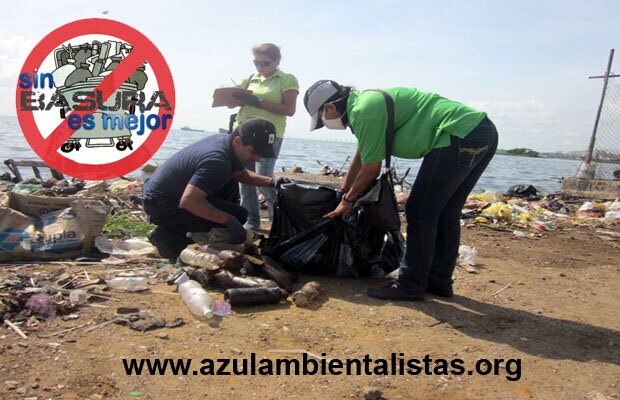 Environmentalists conduct a media tour in the region. Radio and television programs, as well as printed media, will be visited by the Blue Environmentalists Foundation executives, in the framework of its campaign “WITHOUT GARBAGE is better.”
Before the announcement and implementation of the Department of Environment of Zulia state, to dig a… Continue reading
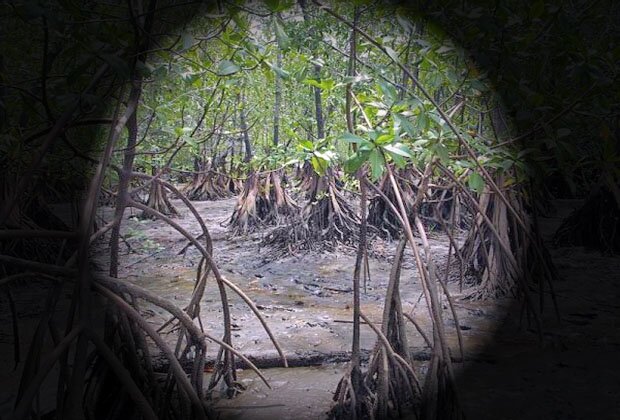 Venezuela is estimated to have four percent of the world’s mangroves.
A unique and ecologically diverse mangrove woodland lines miles of Venezuelan coastline, on the northernmost extreme of South America.
The Venezuelan mangroves span over 2,200 square miles, ranking as one of the largest mangrove ecoregions in South America, but that number is… Continue reading


